
 Visual lesson 1
HIV basics
HIV is not spread by everyday contact.
Hugging, sharing food, toilets, handshakes and mosquito bites do not transmit HIV.
Understand transmissionANAWASS HIV education
ANAWASS explains transmission, prevention, PEP, testing and treatment in plain language—then connects education to private prevention access.
HIV in pictures
Use the arrows or swipe to move through the essentials.
Visual lesson 1HIV basics
Hugging, sharing food, toilets, handshakes and mosquito bites do not transmit HIV.
Understand transmission Visual lesson 2
Testing
Testing windows differ. A qualified provider can help choose the right test and timing.
Learn about testing Visual lesson 3
Time-sensitive
Seek qualified care immediately. The sooner PEP starts, the better.
What to do nowStart here
HIV is a virus that attacks the immune system. Without treatment, it can weaken the body’s ability to fight infections. AIDS is the most advanced stage of HIV infection—it is not a separate virus.
There is currently no cure, but effective antiretroviral treatment can make HIV a manageable long-term health condition. People receiving effective treatment can live long, healthy lives.
Prevention
Different tools can be combined depending on a person’s situation, preferences and access to care.
01
Correct and consistent condom use reduces the risk of HIV and many other STIs.
02
Medicine used before possible exposure by people without HIV. Availability and choice should be discussed with a qualified provider.
03
Emergency medicine used after a possible exposure. It is time-sensitive and must be started within 72 hours.
04
Knowing your status connects you to prevention or treatment. Effective HIV treatment protects health and prevents sexual transmission when viral suppression is maintained.
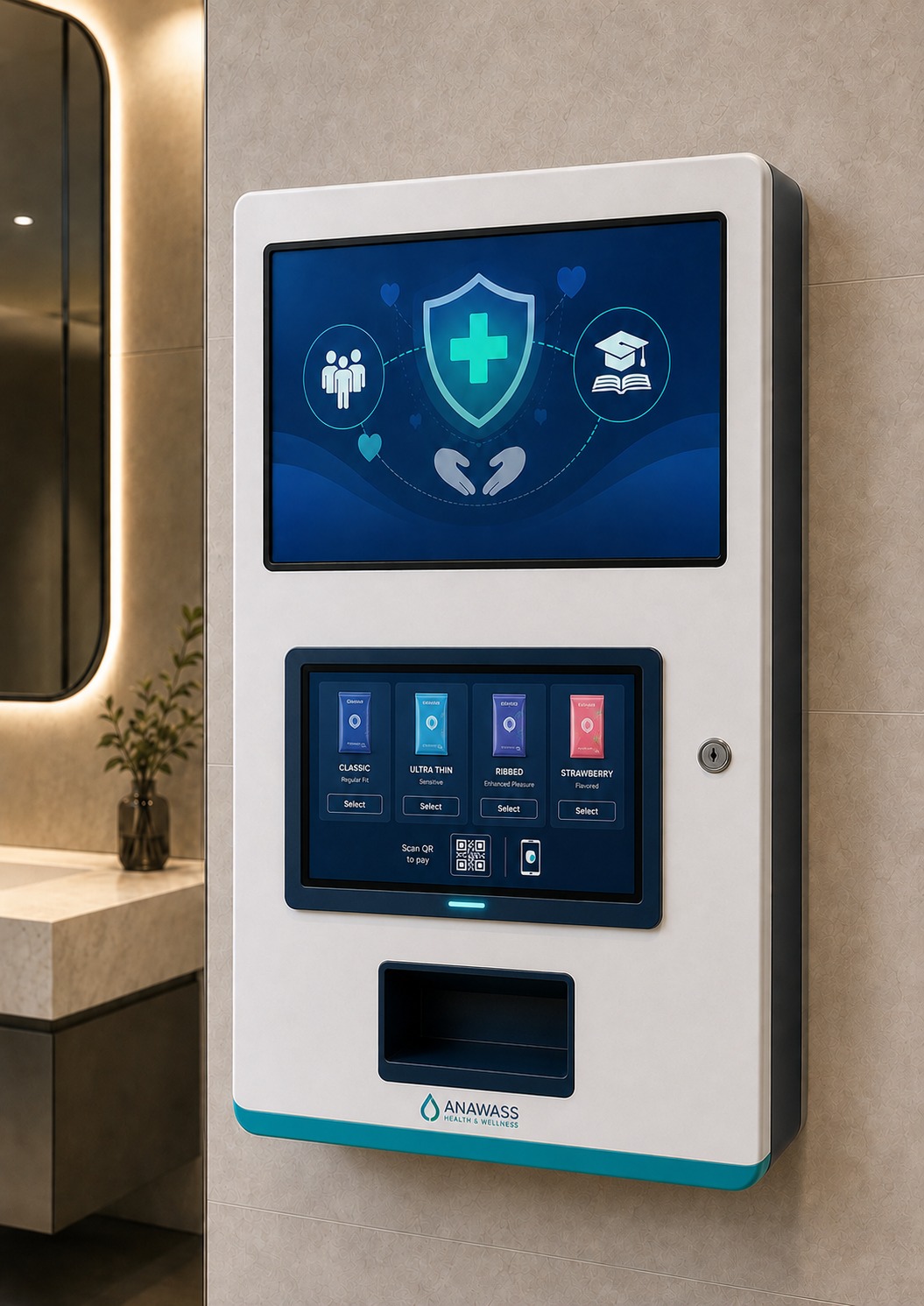
Education connected to action
Clear HIV education is the first step. The ANAWASS smart vending machine is designed to make approved prevention products easier to understand and obtain privately in trusted locations.
Explore the ANAWASS machineUrgent: PEP
PEP—post-exposure prophylaxis—is emergency HIV prevention medicine taken after a possible exposure. It must be started as soon as possible and no later than 72 hours.
What to do now
Do not delay care while trying to calculate your risk online. A qualified provider should assess the situation.
Different HIV tests detect infection at different times. A test taken very soon after exposure may not detect HIV, so a healthcare professional may recommend another test later.
Testing should be voluntary, confidential and connected to clear information before and after the result. A positive screening result must be confirmed according to the national testing process before treatment begins.
Treatment & U=U
Antiretroviral therapy (ART) stops HIV from multiplying. With consistent treatment and care, the amount of virus in the blood can become undetectable.
U=U means Undetectable = Untransmittable: a person taking effective ART who maintains an undetectable viral load does not sexually transmit HIV. Viral-load monitoring and ongoing care matter.
Myths & facts
Ordinary social kissing does not transmit HIV. HIV is not spread through saliva.
No. AIDS is the most advanced stage of untreated HIV. Early diagnosis and effective treatment prevent progression for most people.
Yes. Appearance cannot show HIV status. Testing is the only way to know.
No. PrEP prevents HIV but does not prevent other STIs or pregnancy. Condoms can reduce the risk of many STIs.
See how the ANAWASS smart vending machine supports private prevention access, or continue learning about other STIs.
Trusted sources
Last clinical-content review: September 2026. This page is educational and does not replace professional medical advice.